.png)

October 19, 2026
Welcome to People and Properties, the Cohen-Esrey newsletter where we celebrate the successes of our team members and keep you informed about what is happening in the Cohen-Esrey world. If you have something you would like to share or an achievement that you would like to celebrate, please send it to Lee Harris at lharris@cohenesrey.com. If you are on a property, please print and distribute this newsletter to each member of your property team. You can also find People and Properties on KnowledgeNet. Click here to view previous editions.
Justin Place:
Neighborhood Revitalization at Its Finest
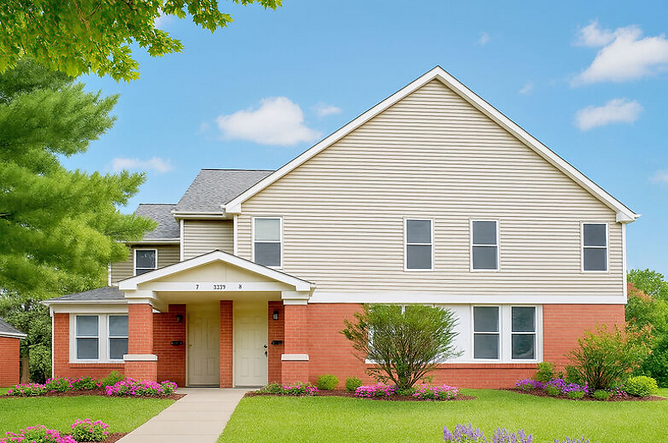
Justin Place is an interesting Kansas City property because it grew out of the city’s 1980s effort to reinvest in the urban core while preserving affordable housing and the architectural character of established neighborhoods.It is a combination of historic buildings and newer construction.
Justin Place was developed in 1986-87 using the federal Urban Development Action Grant (UDAG) Program, a program designed to leverage private investment in economically distressed urban neighborhoods. A HUD historical account describes the original Justin Place development as 100 units combining new construction with existing buildings built as early as 1914, specifically designed to retain the appearance and scale of the surrounding Santa Fe Historic District. That history fits into a larger redevelopment effort occurring around Linwood Boulevard and the Santa Fe neighborhood during the same period. The nearby Linwood Shopping Center opened in 1986 and was regarded as an important catalyst for commercial reinvestment in Kansas City's central-city neighborhoods. Several years ago, one building consisting of four units was destroyed by fire leaving the 96 units that currently comprise the property.
One-bedroom units are 660 square feet and rent for $621 per month; two-bedroom units range from 833 to 1,105 square feet and rent from $621 to $853 per month; and three-bedroom units are 1,036 square feet and rent for $941 per month. Residents enjoy a clubhouse and well-equipped playground. Recently, Justin Place was approved for $1.5 million in Central City Economic Development sales-tax funding for renovation. The Cohen-Esrey Development Group (CEDG) plans to incorporate this funding into a major renovation project utilizing affordable housing tax credits as well as historic tax credits.
Cynthia Cobbins (2021) is the Property Manager, and Alisha Brooks (2017), is the Regional Manager. Dominic Padilla (2024), is the Property Accountant, and Kylie Brunette (2025), is the Property Accounting Assistant. Justin Place continues to place at the top of the NPS Leaderboard for properties of 51 – 120 units.


We welcome the following new team members to Cohen-Esrey and the Nexus 5 Group.
-
Sharniece Finney – Blue Valley Court – Kansas City, MO – Assistant Property Manager
-
Cesareo Ramirez – Jefferson on the Lake – Olathe, KS – Make Ready Technician
-
Anthony Turner – Tower Village – St. Louis, MO – Make Ready Technician
-
Brittany Sanders – Corporate – Director of Compliance
-
Jerry Webb – Carlyle – Shawnee, KS – Maintenance Technician
-
Stephanie Grandon – Carlyle – Shawnee, KS – Maintenance Technician
-
Terry Hill – Geneva Towers – Cedar Rapids, IA – Lead Maintenance Technician
-
Travis Lowery – Lincoln Heights – Hastings, NE – Maintenance Technician
-
Joshua Olson – The Landing at 818 – Sun Prairie, WI – Maintenance Technician

Transformational Construction
Construction continues at Cohen-Esrey Development Group (CEDG) future communities.

A newly completed kitchen at Overlook 157 in Asheville, NC.

A good view of the retaining wall and how the exterior will look at Overlook 157.
Meet the Orchard View Team

Meet the Orchard View team. L to R – Heather Shay (2026), Leasing Agent; Victoria Schleh (2025), Property Manager: and Todd Umfleet (2005), Maintenance Technician.
Orchard View is a 96-unit affordable community in Farmington, MO, that Cohen-Esrey manages for a third-party client.


Turning an Angry Resident Into an Advocate
Every property manager has experienced it. A resident walks into the office angry about a maintenance problem, a neighbor, a charge on their account, parking, noise, or something that didn't happen when it was supposed to. Our natural instinct may be to explain why it happened or defend what our team did. But at that moment, the resident usually isn't looking for an explanation.
They want to know that someone is listening.
How we handle the next few minutes can determine whether the resident becomes even angrier—or walks away believing they live in a community managed by people who genuinely care.
Start by Listening
One of the most effective de-escalation techniques is also the simplest: Don't interrupt. Let the resident explain what happened. Maintain eye contact, pay attention, and resist the temptation to formulate your response while they are still speaking. Sometimes people simply need an opportunity to be heard. Once they've told their story, the emotional temperature often begins to decline. Then summarize what you heard: “Let me make sure I understand what happened.” That simple statement demonstrates that you were listening and gives the resident an opportunity to correct any misunderstanding.

Acknowledge the Frustration
You don't have to agree with everything a resident says to recognize how they feel. Try saying, “I understand why that would be frustrating.” That's very different from admitting fault or agreeing to something you can't provide. It simply communicates empathy. Avoid phrases such as “That's our policy,” “There's nothing I can do,” or “You're the only person who has complained.” Even when technically accurate, those statements rarely improve the conversation.
Lower Your Voice, Not Your Standards
When someone raises their voice, our instinct may be to match their intensity. Do the opposite. Speak slowly and calmly. Don't argue. Don't become defensive. Your objective isn't to win the conversation; it's to solve the problem. At the same time, employees shouldn't be expected to tolerate threats, abusive language, or intimidating behavior. Calmly establish appropriate boundaries when necessary. Professionalism works both ways.
Move Quickly Toward a Solution
Once the resident feels heard, shift the conversation from what happened to what happens next. Ask: “What can we do to make this right?” The resident's answer may be surprisingly reasonable. If you can solve the problem immediately, do it. If you can't, explain exactly what will happen next, who is responsible, and when the resident should expect an update. Never promise something you can't deliver. A realistic promise kept is far better than an ambitious promise broken.
Keep the Resident Informed
Many complaints become serious not because the original problem was especially significant, but because nobody communicated afterward. If a repair requires three days, don't disappear for three days. Provide an update—even if the update is simply, “We're still waiting for the part, but I wanted you to know we haven't forgotten about you.” Silence creates uncertainty. Communication builds trust.
Always Close the Loop

After the problem is resolved, make one more contact. Pick up the telephone and ask: “I wanted to make sure everything was taken care of. Are you satisfied with how we handled it?” That may be the most important conversation of all. Residents don't expect apartment communities to be perfect. Things break. Mistakes happen. Misunderstandings occur. What residents remember is how we responded.
An angry resident presents a challenge, but also an opportunity. Handle the situation poorly and we may lose a resident. Handle it exceptionally well and something very different can happen. The resident who walked into the office as our biggest critic may walk out as one of our strongest advocates.
Listen. Acknowledge. Solve. Communicate. Follow up.
Five simple steps can turn a difficult conversation into a lasting relationship.


Historic Buildings of Cohen-Esrey
Cohen-Esrey has a long history of developing and/or managing some really cool historic buildings. In this series, we feature one such building in each issue.
Village Park

Originally known as Green Acres Apartments and later Astoria Park Apartments, Village Park has been part of Amarillo, TX, for generations. Built in 1950, the 164-unit community reflects an important chapter in the city's residential development and its longstanding commitment to providing affordable housing.
Dating to the mid-20th century, the property features primarily two- and three-bedroom apartments. Its architectural and community significance earned Village Park a place on the National Register of Historic Places in 2024, recognizing its contributions to architecture and community planning.
In 2024, the Cohen-Esrey Development Group (CEDG) joined a partnership to undertake a comprehensive rehabilitation of the aging property. The redevelopment utilizes Affordable Housing Tax Credits along with federal and state historic tax credits to preserve its historic character while modernizing the living environment.
Renamed Village Park, the community is receiving extensive improvements, including renovated kitchens and bathrooms, updated flooring, energy-efficient fixtures, an expanded clubhouse, and enhanced recreational amenities.
The transformation represents more than a physical renovation. It preserves an important piece of Amarillo's housing history while providing attractive, affordable homes for future generations.


Congratulations, Grandma Lisa!
Congratulations to Lisa Paszkiewicz (2008), Affordable Housing Compliance Specialist on the birth of her granddaughter! Emma Pamela Paszkiewicz Duran was born to Jacob Thomas Paszkiewicz and Ximena Joanne Rodriguez Duran on Friday, September 25th weighing 6 lbs. 8 oz. in Leon, Mexico. Grandma looks pretty proud – what an adorable child!


New Resident 30-Day Follow-Up Checklist
The goal is simple: Don't wait for a new resident to tell us something is wrong. Reach out first. That’s what Customer Fulfillment is all about!
Move-In Day
☐ Apartment has received a final inspection before keys are issued
☐ Apartment is clean and completely move-in ready
☐ All appliances, plumbing, HVAC, lights and locks are working
☐ Welcome the resident by name
☐ Review parking, trash, packages, amenities and community procedures
☐ Explain how to submit routine and emergency maintenance requests
☐ Make sure the resident knows how to contact the management office
☐ Provide a welcome note or other personal touch

Within 48–72 Hours
☐ Call the resident—don't rely solely on text or email
☐ Ask: “How is everything going in your new home?”
☐ Ask whether they have discovered any maintenance issues
☐ Enter any necessary work orders immediately
☐ Make sure the resident understands community procedures
☐ Resolve small issues before they become larger frustrations
End of Week One
☐ Confirm that all move-in work orders have been completed
☐ Follow up personally on any significant maintenance issue
☐ Ask whether completed repairs were satisfactory
☐ Check for unresolved questions or concerns
☐ Make sure promises made during leasing and move-in have been fulfilled
Around Day 15
☐ Contact the resident again
☐ Ask how they are enjoying the apartment and community
☐ Ask whether there is anything management could do better
☐ Address concerns about parking, neighbors, packages, amenities or common areas
☐ Document and follow through on anything requiring additional attention
Day 30

☐ Make one final first-month follow-up
☐ Ask: “Now that you've been here a month, how are things going?”
☐ Confirm that there are no outstanding maintenance issues
☐ Thank the resident for choosing the community
☐ Remind them that management wants to hear about concerns early
☐ Invite feedback about their move-in experience
☐ Recognize employees who helped create an exceptional move-in experience
One Final Question
Before considering the move-in process complete, ask:
“If this resident were deciding today whether to rent from us again, have we given them a reason to say yes?”
Remember: The renewal process doesn't begin 60 or 90 days before lease expiration. It begins on Day One.


Welcome Brittany!
Karen Crouch (2019), Managing Director of Cohen-Esrey Communities (CEC), is pleased to announce that Brittany Sanders has joined the Compliance Team as its Director.

Brittany is an affordable housing compliance leader with more than five years of Director-level compliance experience and more than 12 years of experience in affordable housing, property management, compliance, and operational leadership.
Most recently she served as Director of Compliance for Remnant Management while continuing to provide compliance oversight for United Management II. This involved compliance leadership across 180 properties, including 134 properties with Remnant Management and 46 properties with United Management II. She oversaw affordable housing compliance involving HUD, Low-Income Housing Tax Credit (LIHTC), North Carolina Housing Finance Agency (NCHFA), Public Housing Authorities (PHA), ACC, Public Housing, income-based housing, Housing Assistance Payments (HAP), and South Carolina affordable housing requirements.
Brittany has extensive experience managing compliance audits, NCHFA file reviews, HUD Management and Occupancy Reviews (MORs), corrective actions, resident certifications, utility allowances, rent schedules, PIC submissions, RCRS and Emphasy reporting, Affordable Fair Housing Marketing Plans, tenant ledger adjustments, and compliance staff development.
In her most recent assignment, she led a 12-person Compliance Department for Remnant Management and provided oversight of a 14-person Compliance Department for United Management II, including leadership and guidance for the Junior Director of Compliance.
We are thrilled to welcome Brittany to Cohen-Esrey!

Cities of Cohen-Esrey
Waunakee, WI: The Only Waunakee in the World

Waunakee, WI, is a growing community located about 10 miles north of Madison in Dane County. Known for its small-town atmosphere and proximity to the state capital, Waunakee has evolved from an agricultural community into one of the Madison metropolitan area’s most desirable suburbs.
The village traces its roots to the 1870s, when development followed the arrival of the railroad. Agriculture and local commerce shaped its early economy, while improved transportation and the expansion of Madison gradually transformed Waunakee into a residential and employment center. Today, the community combines an established downtown with newer neighborhoods, schools, parks, businesses, and commercial development.
Waunakee is particularly attractive to families because of its highly regarded public schools, recreational amenities, and convenient access to Madison. Residents can enjoy a quieter community while remaining within a relatively short commute of major employers, the University of Wisconsin–Madison, healthcare facilities, shopping, entertainment, and Dane County Regional Airport.
Rapid population growth has been one of Waunakee’s defining characteristics in recent decades. The most recent population estimate was 16,860, an increase of 30.7% over the past ten years! New housing development has expanded the village considerably, while community leaders have worked to maintain its traditional character and quality of life.
For apartment owners and developers, Waunakee benefits from strong Madison-area employment, household growth, and demand from residents seeking suburban living. Its combination of accessibility, schools, community identity, and economic stability makes Waunakee an increasingly important part of the greater Madison housing market.
The Cohen-Esrey Development Group (CEDG) developed the 50-unit Village on Main Apartments, an affordable housing community in Waunakee.

HR Corner
By Franci Rabinowitz (2025), Recruiter

Be the Teammate You’d Want to Work With
Strong teams aren’t built by accident or job titles. They’re built by people who communicate, follow through, offer support and show respect for one another. Every one of us has worked with someone who made our job easier. They communicate clearly, follow through on commitments, offer support when needed, and help create a positive environment.
This month, challenge yourself to reflect:
Are we that teammate for others?
Being a great teammate isn't about being perfect. It's about the small choices we make every day that build trust and strengthen our teams. Consider these questions:
✅ Do I communicate effectively?
-
Do I keep others informed?
-
Do I respond in a timely manner?
-
Do I ask questions when something isn't clear?
✅ Do I follow through?
-
When I commit to something, do others know they can count on me?
-
Do I meet deadlines or communicate early if I need help?
✅ Do I offer support?
-
Do I lend a hand when a coworker is overwhelmed?
-
Do I share knowledge that could help someone succeed?
✅ Do I bring solutions?
-
When I spot a challenge, do I think about possible solutions?
-
Do I contribute ideas that help move us forward?
✅ Do I give others the benefit of the doubt?
-
Do I assume positive intent?
-
Do I seek understanding before making assumptions?
These everyday actions align closely with the values that shape our Cohen-Esrey culture. When we communicate with respect, support one another, follow through on our commitments, and work together to solve problems, we create a workplace where everyone can do their best work.
The next time you're working with a colleague, ask yourself:
"Am I being the teammate I'd want to work with?"
Small actions make a big difference, and great teams are built one interaction at a time.


Selling “To” vs. Buying “From”
By R. Lee Harris (1975), President & CEO
I have written before about the sales mindset. But when it comes to apartment leasing, I think there is an important distinction worth making: Are we trying to sell someone an apartment, or are we helping someone find the right home?

We have all heard the old saying, “He could sell ice to an Eskimo.” It conjures up an image of a slick, fast-talking salesperson who can convince someone to buy something whether they need it or not. That is exactly the opposite of how we want our leasing professionals—and our apartment communities—to be perceived.
In fact, I would like to eliminate much of the terminology of “selling” from apartment leasing.
Why? Because the traditional notion of selling tends to be product-focused. We have an apartment available, and our objective is to convince the prospect to lease it. Occupancy matters. Closing ratios matter. Leasing velocity matters. But when those metrics become the primary focus of the conversation, it is easy to forget the person sitting across the desk or talking with us on the telephone.
I suggest a different mindset:
When we sell an apartment to someone, we are product-focused.
When we help someone choose an apartment, we are resident-focused.
The difference can be enormous.
When we help someone choose a home, the apartment itself temporarily takes a back seat. Our first objective is to understand the prospect. Why are they moving? What is important to them? How much space do they need? What is their budget? Do they work from home? Do they have a pet? Is location important? Are they looking for a quiet environment, convenience, amenities, a particular floor plan, or something else?
Most importantly, we listen.
Through this discovery process, we may occasionally determine that our community is not the best fit. And that is OK. We are helping someone find what they need—not simply trying to fill our next vacancy.
Ironically, this approach may actually result in more leases.
People know when they are being sold. They also know when someone is genuinely interested in helping them. The leasing professional who establishes trust, asks thoughtful questions, listens carefully and then connects the prospect’s needs with the appropriate apartment has a tremendous advantage.
Consider the difference between these two approaches.
A prospect walks into the leasing office and the leasing professional immediately launches into a presentation: “We have a beautiful two-bedroom available with stainless steel appliances, a fitness center, swimming pool, package lockers and a move-in special if you lease today.”

That may all be true. But we have not yet learned whether any of those things matter to the prospect.
Instead, imagine beginning with: “Tell me a little about what you're looking for in your next home.”
Now we have started a conversation rather than a sales pitch.
There are some simple principles we can follow to create a “helping them choose” culture in apartment leasing:
-
Always start by asking questions. Learn why the prospect is moving and what matters most in choosing a new home.
-
Listen more than you talk. A great leasing professional does not need to dominate the conversation. The prospect should do much of the talking.
-
Match benefits to needs. Don't recite every feature of the property. If the prospect works from home, talk about space for a home office. If they have a dog, discuss pet-friendly features. Make the conversation relevant.
-
Genuinely care about the prospect. Sometimes that may mean acknowledging that another floor plan—or even another community—is a better fit. That honesty builds trust.
-
Remember that the relationship extends beyond move-in. The leasing process is the beginning of the resident relationship, not the end of it. A resident who feels respected during leasing is more likely to begin the relationship with the community on a positive note.

There is another important benefit. Even prospects who do not lease from us can become advocates. Someone who receives exceptional treatment may tell a friend, coworker or family member, “That community wasn't quite right for me, but you should go talk to them. They were terrific.”
That recommendation is worth far more than a high-pressure closing technique.
Certainly, we want leases. Apartment communities are businesses, and occupancy is essential. But desperation to “make the sale” can actually work against us. Prospects sense pressure. And the harder we push, the more resistance we may create.
The best leasing professionals aren't simply good at selling apartments. They are exceptionally good at helping people make decisions.
When we focus first on the prospect, build trust and genuinely help people find the home that best meets their needs, everyone wins. Sometimes that means looking beyond today's lease.
But over time, satisfied residents, renewals, referrals and a strong reputation will produce dividends far greater than simply closing the next prospect who walks through the door.


An Empowerment Story
By Kasey McKnight (2026), Mobile Leasing Consultant

My name is Kasey McKnight, and I have been a Mobile Leasing Agent with Cohen-Esrey since July of this year. When I think of the word Empowerment, my experience with Cohen-Esrey truly embodies what that word means to me.
From the beginning, I have been provided with the tools, support, and resources needed to succeed, and that has made a meaningful difference in my life. I am able to pursue a career I genuinely enjoy while still being present for my family, and that is something I am grateful for.
I truly feel that I have found my safe space with Cohen-Esrey. I look forward to work each day and being part of a company that demonstrates such genuine understanding and support for its employees. My family and I cannot thank you enough for the emphasis Cohen-Esrey places on work-life balance, team member well-being, especially the importance of mental health, regardless of an individual's position within the company.
Thank you for creating an environment where team members can feel supported, valued, and empowered. I am grateful to be part of Cohen-Esrey, and I look forward to what the future holds.


Fun Photos!
In 2017 there was an Eclipse Party luncheon and viewing at our former Corporate Office in the Cloverleaf Office Park.


NPS Leaderboards
The three NPS Leaderboards have been updated as of October 16, 2026. In the 50-Units or Less category, we’ve had a bit of a shakeup. Clay Hall Senior Residences (Enid, OK) has vaulted into first place with an NPS of +90.7! In the Properties 51 to 120-Units category, Justin Place (Kansas City, MO) continues to lead the pack with an NPS of +97.17. And in the Properties of More than 120-Units category, Panorama Heights (Colorado Springs) is the leader with an NPS of +71.43. There are 21 properties on Leaderboards – same as our last report. Our overall NPS dropped a point to +41!


